Frequently Asked Questions
We’ve gathered the most common questions in one place to make things simple, clear, and easy as you explore your next steps.
MRC Students
-
MRC generally attracts University educated women, who are highly motivated and who are interested in developing their skills and deepening their knowledge of and inspiration in Torah and Judaism through learning text and seeing sources. Our mission at MRC is to inspire and educate young Jewish women and to empower them with the learning skills to develop an independent relationship with Torah that leads to long-term growth. Our students also leave MRC with a strong sense of Jewish unity and an understanding that there is more than one legitimate Torah-observant community in today’s world.
-
At any given time, MRC will usually have anywhere from 20-35 students.
-
MRC attracts a wide demographic of students from all across the world, mostly from North America, Europe, Australia, South Africa and Latin America. The majority are students who did not grow up observant and became more interested and committed to their Judaism in University and beyond. We also attract women who grew up modern orthodox and even those who may have attended a Beit Yaakov and are now looking to be reinspired or to figure out where they feel most comfortable in the Orthodox community. We also have students who are in a conversion process or who finished their conversion.
-
The MRC curriculum is a year in its entirety but many women cannot commit to coming for that long. We recommend to at least come for a full zman, which can vary in length depending on the time of year. Minimally we will allow a student to live in our dorms for a stay of at least 3 weeks.
Academic Program
-
Three mornings a week begin at 8:30 a.m. with Hebrew grammar followed by Chumash, while two mornings begin at 9:00 a.m. with Moments of Inspiration followed by Navi. Chumash and Navi are interactive, skills-based classes that give students the opportunity to strengthen their reading and translation skills, with the ultimate goal of becoming confident, independent learners.
The rest of the day includes a diverse mix of classes covering Halacha, Chassidut, Tefilla, the Jewish Woman, Parsha, Mussar, and much more. Students have an hour-long lunch break as well as several shorter breaks throughout the day. Classes generally finish between 5:30 and 6:30 p.m.
-
Our days are jam packed with classes and we even offer optional classes during lunch and most evenings for those who are interested. We have a half hour break in the morning from 11:30-12 and then lunch break is 1-2 with a short afternoon break from 4:10-4.30. Our evenings are free as classes end anywhere between 5:30 and 6:30. We do not have school on Fridays.
-
We recommend that a student have at least a working knowledge of the Aleph bet, but if not, we can still work with them to get them up to the Basics level.
-
As part of our Aliyah Program, we offer 2 levels of ulpan anywhere from 3 to 5 times a week, depending on the demand. Ulpan is open to anyone who would like to spend focused time working on their Hebrew speaking skills.
-
Part of the curriculum is set and the level a student is in is based on either skills or knowledge. Parts of the curriculum are elective classes that a student can choose based on preference.
-
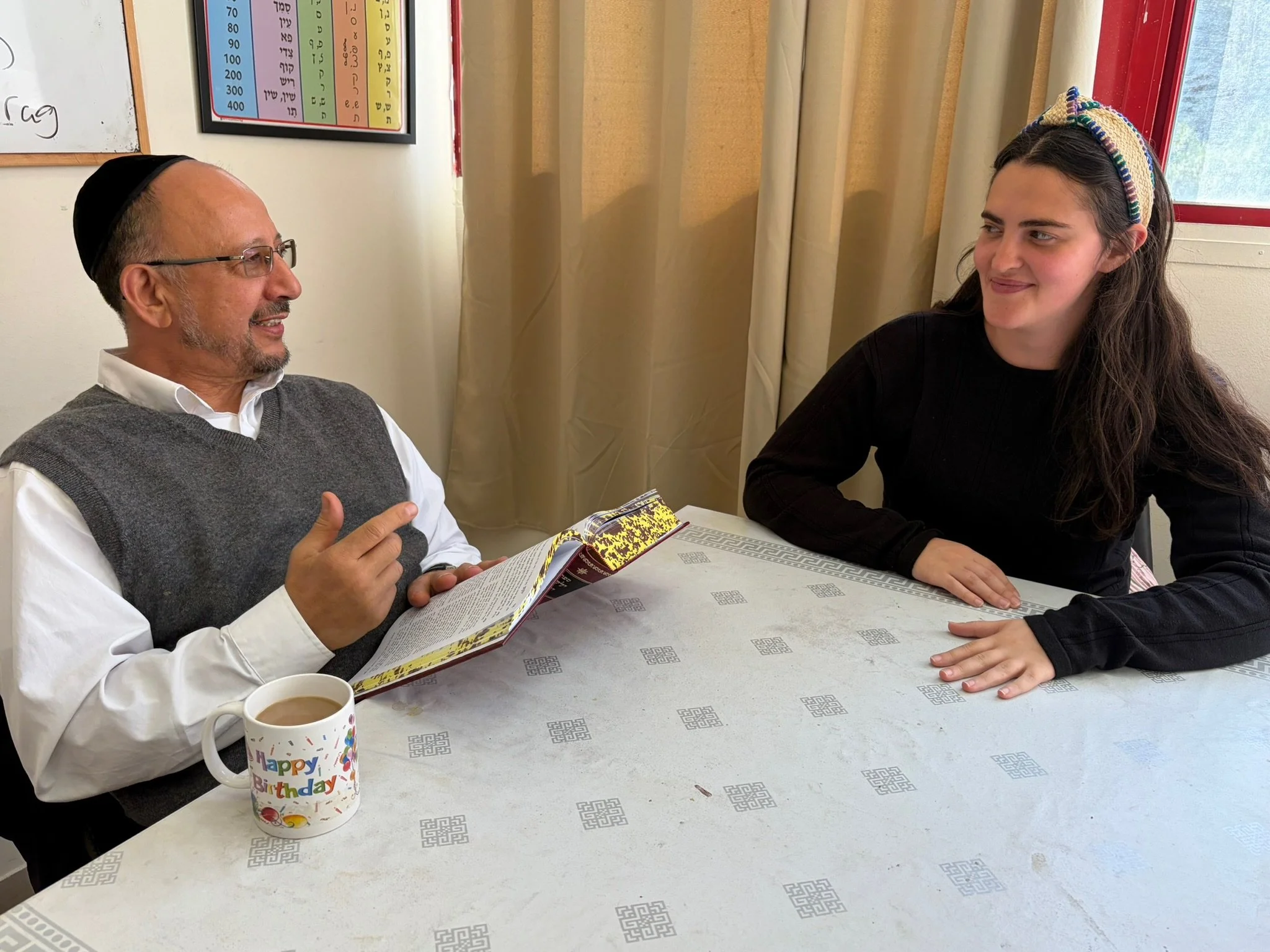
We have a whole host of teachers who are available to mentor students throughout the week in half hour intervals. Students can sign up to speak or learn 1 on 1 with the teachers they feel the most connected to. In addition, there are regular bi-weekly check-ins with both the Director, Rabbi Manning, and the Educational Director, Yaffa Moskowitz.
-
MRC does not give tests or issue grades. Students are coming to learn just because they want to learn.
-
MRC is happy to provide a transcript and to give work that can be graded to students who need them for college credits.
Campus Life
-
MRC is located in the Jerusalem neighborhood of Givat Shaul, around 12 minutes’ walk from the Kiryat Moshe light-rail stop and about 20 minutes’ walk from the Central Bus Station. Givat Shaul is a buzzing area well served by public transport and with stores of all kinds, banks, supermarkets, coffee bars, cafes and restaurants. It is also adjacent to the beautiful Jerusalem forest with miles of trails, hikes and places to walk and run. On Shabbat many of our students walk over to the nearby neighborhoods of Har Nof, Nachlaot, Rechavia and to the Old City.
The address of the school campus is 11 Beit HaDefus St, Lobby 4, Floor -2, Givat Shaul, Jerusalem 9548311.
-
We have 3 fully furnished dorms apartments around 5 minutes’ walk from the school in the Kiryat Moshe neighborhood, which is a hub of residential life for both English-speaking families and native Israelis. Full time students are offered accommodation with the other MRC students. In addition, MRC students can choose to attend classes and live off-campus.
-
The apartments each include bedrooms with closets, linen, blankets and pillows, bathrooms and showers, a fully-fitted dairy kitchen, a communal area and balcony, AC, heating and hot-water, washing machines, dryers and WiFi.
-
We provide a hot meat lunch every day at the school together with healthy salads and vegetarian options, together with a generous selection of seasonal produce, toppings, and dressings. In the winter, lunch also includes fresh home-made soup. Tea, coffee and snacks (including fresh seasonal fruits, baked goods and sometimes great kugels!) are available to students throughout the day.
-
MRC has a dedicated house mother (Eim Bayit) who lives very close to the student dorms. She works hard before students arrive and while they are at MRC to ensure that all students are placed in the dorms that suit them best and to keep the apartments running smoothly. She is also available in case of emergency to provide students with the help they need. Our Eim Bayit’s home is also open to any student who has a problem or just wants a chat and she regularly hosts students for Shabbat.
-
Yes
-
The MRC campus is located on a quiet floor of an office building and is not open to the street. The front door to the main school area is kept locked at all times and is opened by an electronic key code which all students have. Our dorms all have combination locks and students are given clear orientation as to who may be admitted. Combinations and codes are changed periodically.
-
MRC has a small gym room with exercise equipment, mats and weights. Fully equipped public gyms and pools are located nearby.
Application and Tuition
-
Yes. Students requiring financial aid should first look into local options. Many local Jewish federations, synagogues, youth groups, and other organizations offer scholarships for study in Israel, and are familiar with MRC. Students should firstly identify and reach out to these dedicated sources of funding.
MRC is also part of the MASA program, allowing MASA-qualifying students to use this funding towards their tuition.
For students needing further financial assistance, MRC makes generous needs-based scholarships available to those students who qualify. Students may apply for financial assistance once they have been accepted to MRC by contacting our Executive Director, Rabbi Shmuel Jablon at sjablon@darchenoam.org.
We also work with students to create payment plans during and after their stay that make it possible to learn at MRC.
-
You can apply to MRC at any time using the following link www.midreshetrachel.org/apply . After the team reviews, we will send you a formal application to your email address. Along with the formal application, you will also need to send us an essay, two references and to fill in a medical form.
Details are on the formal application link.
-
Applicants will usually need to have a telephone or Zoom conversation with us. We’ll be in touch with you after we receive your application to set something up.
-
After your interview with us, and once we have all the relevant information and papers, it can take up to two weeks to process your application, but we’ll usually let you know within a few days.
Extracurricular Activities
-
We try not to have too many activities going on after hours as students have a long day. That being said, we do offer some optional evening classes for those who are interested, as well as a choir, and various activities, usually holiday related, with our dorm mother.
-
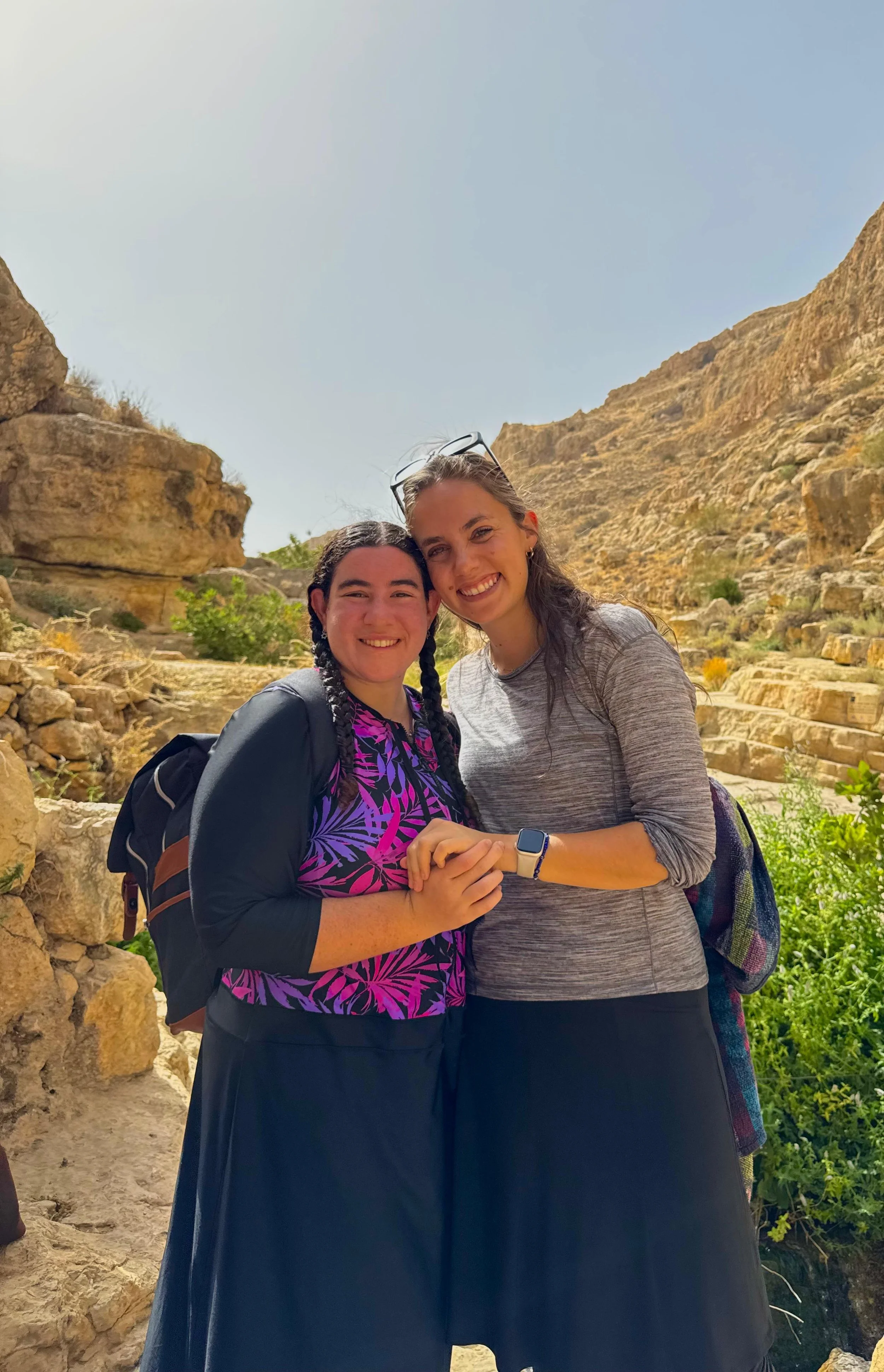
MRC prides itself on the regular tiyulim that we offer throughout the year. These are a combination of fun and educational and allow our students to meet locals all over the country, see different communities, experience both Biblical and modern Jewish history where it actually took place, and explore the amazing sites of our beautiful country.
-
We do have a few mandatory Shabbatonim throughout the year, but Shabbat is mostly a time for students to unwind, staying in their apartment and eating out at local families, or to explore and visit different communities throughout Israel, spending Shabbat with family, friends, MRC alumni, or with our faculty and staff.
The Married Couples Program
-
A couple can still participate in our couple’s programming even if only one spouse is learning in MRC or Shapell’s, but they will certainly benefit more from all that the program has to offer if they are both learning in our Yeshiva and Midrasha.
-
No. Although most of our participants are relatively newly married, the program is open for couples at any stage.
-
No. Dates can be flexible to suit your schedule.
-
Yes. It will just take advanced planning to arrange childcare.
-
For our two fellowship couples, we have two apartments available on the Yeshiva campus. These are partially subsidized, meaning you’ll be responsible for a portion of the rent. All other couples have to organize their own accommodations. We recommend finding apartments in neighborhoods in close proximity to the Yeshiva and Midrasha.
-
No. Part-time schedules can be coordinated with the Yeshiva and Midrasha.
-
Yes.
-
You should complete the standard application for admission to MRC and your husband should apply to Shapell’s.
-
Fellowships are for married couples who will commit to an entire academic year of full time study at Shapell’s/ Yeshiva Darche Noam and Midreshet Rachel v’Chaya. Fellows are expected to maintain excellent attendance, pursue their studies diligently, be role models for their fellow students, and play a leadership role in the Yeshiva and Midrasha community.
-
Full tuition (after MASA Israel scholarships for those who are eligible; see https://www.masaisrael.org/program/midreshet-rachel-shapells-yeshiva-darche-noam/)
Daily lunch (the main meal of the day in Israel) when classes are in session.
Participation at “In Shabbatot” (10 – 12 times a year), special Shabbatonim (multiple times a year) and the other activities of both divisions.
The ability to rent partially subsidized on-campus housing in one of the apartments on the Shapell’s campus.
-
Fellowships do not cover travel to and from Israel, other food not listed above, other apartment expenses, transit within Israel, cell phones, child care, insurance, and other daily incidental expenses.
Students who qualify for additional needs-based scholarships from MASA Israel are encouraged to apply to MASA. Any needs-based funds received will be credited to the Fellows in the form of a monthly stipend which can be used to pay their subsidized rent or for other needs.
-
All applicants must first complete the standard application for admission to Shapell’s MRC. Upon acceptance to the Yeshiva and Midrasha, candidates for a fellowship will then be invited to complete a supplementary application.
Fellowship finalists then are interviewed by the Dean/Rosh Yeshiva for a final decision.
-
Yes. We never want to turn students away for financial reasons and do our best to make it feasible for both spouses to study in our schools.
Aliyah Program
-
MRC students come from all over the world and most return to their home countries to build and support Jewish communities. But many are also exploring the option of moving to Israel. The Aliya Track gives MRC students access to practical information, personal connections, and Torah inspiration which will help them to make these important decisions. It also provides support for women who have finished or are currently in the aliya process.
The rest of the day includes a diverse mix of classes covering Halacha, Chassidut, Tefilla, the Jewish Woman, Parsha, Mussar, and much more. Students have an hour-long lunch break as well as several shorter breaks throughout the day. Classes generally finish between 5:30 and 6:30 p.m.
-
Daily Ulpan classes (Beginner/Advanced)
Weekly Seminars on important Aliya topics including: college and masters’ options in Israel, careers and job opportunities, managing finances, dating and marriage, navigating the Israeli health system and more.
Opportunities to network professionally with hundreds of MRC & Shapell’s alumni in different fields throughout the country.
The possibility of Shabbat placements in communities all over the country.
-
Students in the track are encouraged to take full advantage of all the classes offered but that is not a requirement.
-
No. The Aliya track is open to all MRC students, many of whom are just exploring options.
-
Yes.
-
No. All students in the Aliya Track are also taking MRC classes. The special Aliya Track sessions are additional to regular classes.
-
No.
-
No. Both full-time and part-time MRC students are welcome.
-
YES! Full-time MRC students who have made Aliya in the 2 years prior to their arrival at MRC will receive an automatic 50% tuition discount. Time spent in Israel National Service or the IDF will also count in your favor and the 2 years will be calculated from the end of your National Service or army service.
-
The Aliya program at Midreshet Rachel allows for a soft landing for someone who has just made aliya, providing a place to live and a structured day, while sorting out all the bureaucratic technicalities and deciding on their next step. Socially, the students can make friends with other women in the same stage of life and create relationships with teachers and other mentors, cultivating a community for themselves while they navigate all the challenges of aliya.